
What Is Metabolic Health, And Why It’s the Key to Your Energy, Weight, and Long-Term Wellness
You eat reasonably well. You’re not completely sedentary. You don’t have any major diagnoses. And yet – you feel tired most of the day, your energy crashes after meals, your weight won’t budge no matter what you try, and your focus comes and goes like bad Wi-Fi. All of these symptoms might have you wondering: What Is Metabolic Health, and does it play a role?
If that sounds familiar, your metabolism might be the missing piece of the puzzle.
Metabolic health is one of the most important and most overlooked factors in how you feel every single day. Here’s what it actually means, why most people’s metabolic health is worse than they realize, and what you can do about it starting today.

What Is Metabolic Health, Exactly?
Metabolism isn’t just about how fast you burn calories. At its core, your metabolism is the set of processes your body uses to convert food into energy – and how efficiently it manages that energy across every system in your body.
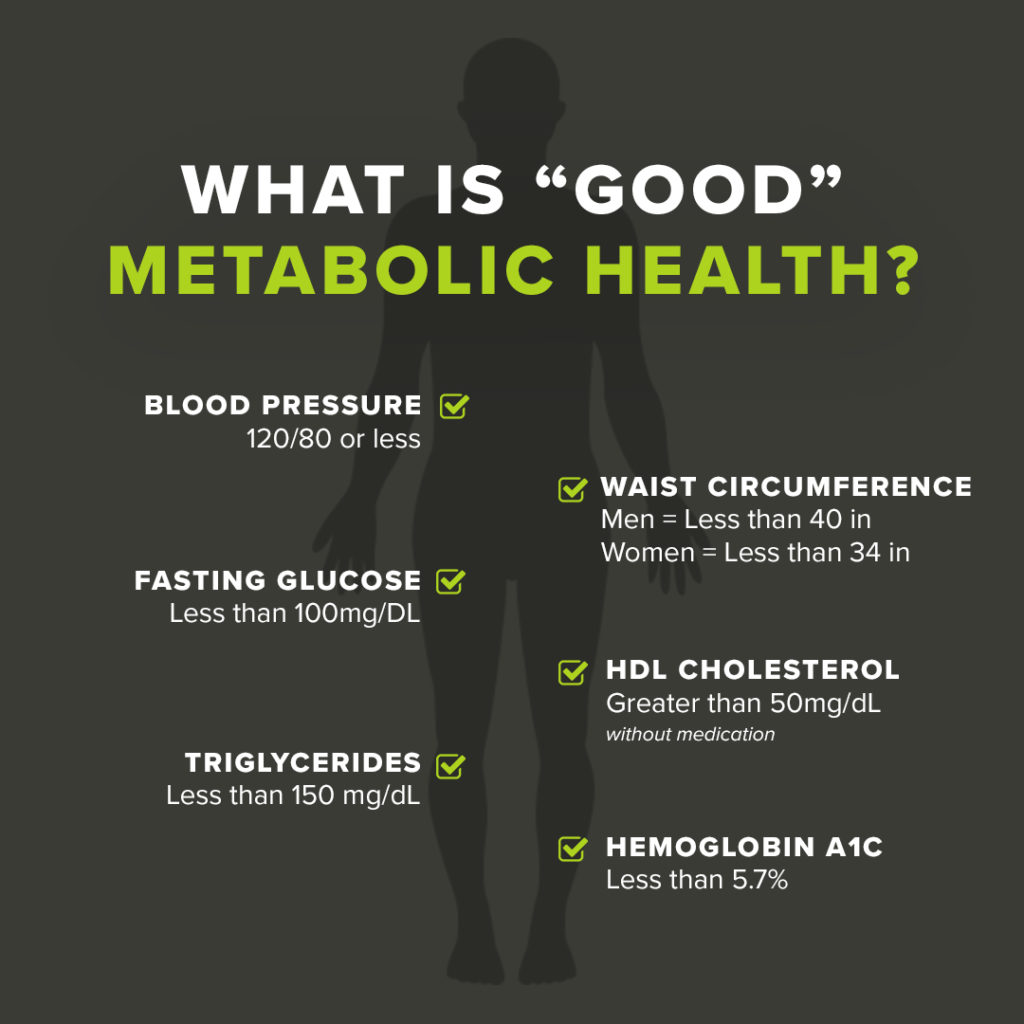
Metabolic health refers to how well those processes are working. Researchers typically define good metabolic health using five key markers:
– **Blood glucose (blood sugar)** – how stable your levels are throughout the day
– **Insulin sensitivity** – how effectively your cells respond to insulin and absorb glucose
– **Blood pressure** – consistently within a healthy range without medication
– **Triglycerides** – a type of fat in the blood that rises when you eat excess carbs or sugar
– **Waist circumference** – a proxy for harmful visceral fat around the organs
To be considered metabolically healthy, you ideally want all five in an optimal range – not just “not diabetic,” but genuinely thriving.
—
The Uncomfortable Truth: Most People Aren’t Metabolically Healthy
Here’s where it gets sobering. Research from the University of North Carolina found that only around **12% of American adults** meet the criteria for good metabolic health. That means roughly 9 in 10 people are living with some degree of metabolic dysfunction – most of them without knowing it.
Why? Because poor metabolic health doesn’t always announce itself with obvious symptoms early on. Instead, it shows up as:
– Afternoon energy crashes
– Intense cravings for sugar or carbs
– Difficulty losing weight despite “doing everything right”
– Brain fog and trouble concentrating
– Poor sleep quality
– Mood swings and irritability
These are easy to dismiss as just being busy, stressed, or getting older. But they’re often your body’s early warning signals that something in your metabolic engine needs attention.
—
Why Metabolic Health Matters More Than You Think
Metabolic health isn’t just a number on a lab report. It has a direct, measurable impact on your daily quality of life – and your long-term future.
### Energy and Focus
Your brain runs almost entirely on glucose. When your blood sugar swings up and down throughout the day – from a big breakfast, a sugary coffee, or a carb-heavy lunch – your energy and mental clarity go with it. Stable metabolic health means stable energy. No crashes. No desperate reach for caffeine at 3pm.
### Weight and Body Composition
Metabolic dysfunction often leads to insulin resistance, a state where your cells stop responding efficiently to insulin. When that happens, your body stores more fat – especially around the abdomen – and has a much harder time burning it. Improving metabolic health is frequently the unlock people have been searching for when diet and exercise alone aren’t moving the needle.
### Mood and Mental Health
There’s a strong and well-documented link between metabolic health and mental wellbeing. Chronic blood sugar instability is associated with increased anxiety, depression, and mood volatility. Getting your metabolism on track isn’t just a physical win – it can genuinely change how you feel mentally.
### Long-Term Disease Risk
Poor metabolic health is the underlying driver of many of the most serious chronic conditions: type 2 diabetes, heart disease, non-alcoholic fatty liver disease, and even certain cancers. Addressing it now, before a diagnosis forces you to, is one of the highest-leverage investments you can make in your health.
What Actually Affects Your Metabolic Health?
Good news: metabolic health is highly responsive to lifestyle. The four biggest levers are:
**1. Nutrition**
Not just what you eat, but how your body responds to it. Highly processed foods, refined carbohydrates, and excess sugar drive blood sugar spikes and insulin resistance over time. Whole foods, fiber, protein, and healthy fats help keep glucose stable and support metabolic function.
**2. Movement**
Exercise – especially a mix of strength training and walking – is one of the most powerful tools for improving insulin sensitivity. Even a 10-minute walk after meals has been shown to significantly blunt post-meal glucose spikes.
**3. Sleep**
One night of poor sleep can measurably reduce insulin sensitivity. Chronic sleep deprivation is one of the fastest ways to damage metabolic health, yet it’s rarely treated as a health priority.
**4. Stress**
Cortisol, the stress hormone, directly raises blood glucose. Chronic stress keeps cortisol elevated, which keeps glucose elevated, which worsens metabolic health over time. Managing stress isn’t just good for your mental health – it’s metabolically essential.
The tricky part? These four factors don’t work in isolation. Sleep affects your cravings. Your stress affects your sleep. Your nutrition affects your workout performance. Metabolic health is a system, and improving it requires seeing the full picture.

How to Start Improving Your Metabolic Health Today
You don’t need to overhaul your entire life overnight. Start with awareness.
**Track your patterns.** You can’t improve what you can’t see. Logging your meals, activity, sleep, and energy levels – even for a week – reveals connections you’d never notice otherwise. Does your energy always dip on days you skip breakfast? Does your sleep suffer when you eat late? Data makes these invisible patterns visible.
**Focus on glucose stability, not just calories.** Two meals with identical calorie counts can have dramatically different effects on your blood sugar and energy. Prioritizing foods and meal patterns that keep glucose steady is one of the most impactful shifts you can make.
**Move more, in smaller bursts.** You don’t need a 60-minute gym session every day. Short walks, standing breaks, and brief movement throughout the day add up – and are particularly effective at managing post-meal glucose.
**Connect the dots.** Sleep, nutrition, activity, and stress are all metabolic inputs. The goal is to understand how they interact in *your* body – because individual responses vary more than most people expect.
—
Your Metabolism Is Unique – Your Coaching Should Be Too
General health advice is everywhere. But metabolic health is deeply personal. What spikes your blood sugar might not spike your friend’s. What improves your energy might do nothing for someone else. Generic advice can only take you so far.
That’s the idea behind **VitalCoach** – a personalized health and metabolic wellness platform that brings together activity tracking, nutrition logging, glucose and energy insights, and AI-powered coaching in one place. Instead of guessing, you get a clear picture of your metabolic health and specific, data-driven recommendations tailored to how *your* body actually responds.
Your AI coach adapts to your patterns – flagging when your glucose spiked after dinner, noticing that you sleep better on days with morning workouts, and building weekly plans around what’s actually working for you.
Metabolic health isn’t a one-size-fits-all problem. Your approach to fixing it shouldn’t be either.
**Ready to understand what’s really going on with your energy, weight, and wellness?**
Start your journey with VitalCoach – free




Leave a Reply